
 20/20
20/20  Astigmatism
 Cataract
  Contact Lenses
 Dry Eye
  Eye Care
  General
 LASIK
LASIK  Vision Correction
  Magruder Laser Vision
 If your vision has started to look cloudy, dim, or hazy, everyday activities like reading, driving, or recognizing faces may become increasingly difficult. Many people describe cataracts as feeling like they’re looking through a foggy window. When these symptoms begin to interfere with your quality of life, cataract surgery may become the next step.
At Magruder Laser Vision in Orlando, patients receive advanced care to restore clearer vision safely and comfortably. Understanding what happens on the day of cataract surgery can help you feel prepared, confident, and ready for the experience.
Arriving and checking in for your procedure
On the day of your cataract surgery, you’ll typically arrive at the surgical center about 30 to 60 minutes before the procedure. This allows time for final preparations and paperwork.
A member of the care team will review your medical information, confirm the surgical plan, and answer any last-minute questions. This is also when your vital signs may be checked to ensure everything is normal before the procedure begins. Arriving early helps ensure a calm, organized start to the day and allows the surgical team to prepare you comfortably for the next steps.
Preparing your eye for surgery
Once you are checked in, the team will begin preparing your eye for the procedure. This usually involves administering medicated eye drops. These drops serve important purposes, including:
- Dilating the pupil so the surgeon can access the lens
- Reducing the risk of infection
- Preventing inflammation after the procedure
Your eye and the surrounding area will also be gently cleaned to maintain a sterile surgical environment. In some cases, a mild oral medication may be provided to help you relax. This period typically takes about 20 to 30 minutes as the medications begin to take effect.
Numbing the eye for comfort
Before surgery, local anesthesia is used to numb the eye, so you remain comfortable throughout the procedure. Most cataract surgeries use numbing eye drops rather than injections. Because the anesthesia works quickly, you should not feel pain during the procedure.
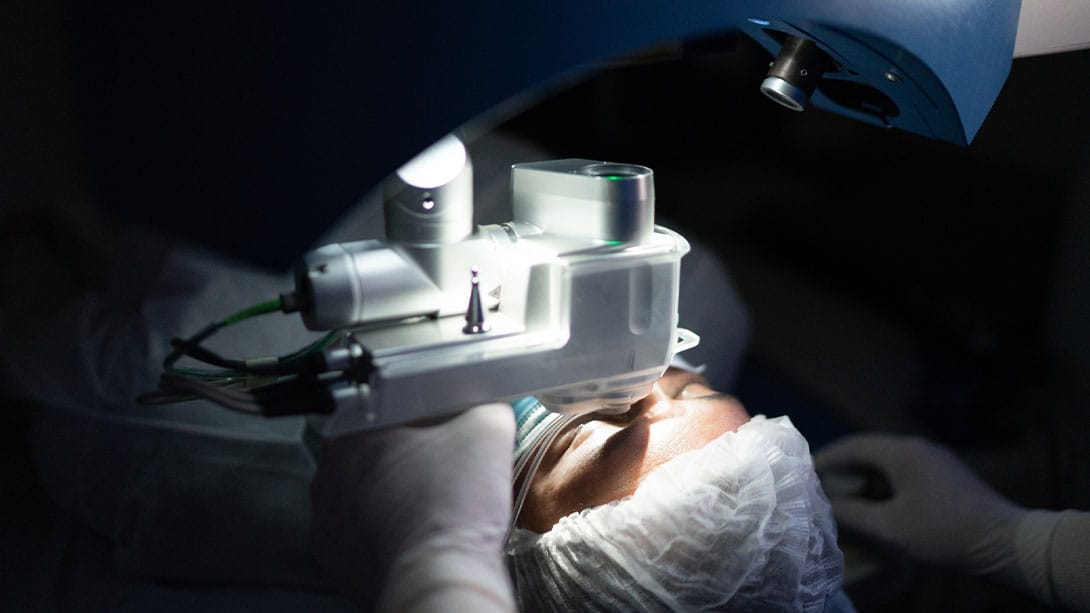
Your surgical team will also ensure that your head and eyes are properly positioned. A small device may be used to keep your eyelids open so you don’t have to worry about blinking.
The cataract surgery procedure
Cataract surgery itself is relatively quick and typically takes about 15 to 30 minutes per eye. During the procedure, your surgeon makes a small incision in the cornea to access the natural lens. The cloudy lens is then removed safely using advanced surgical techniques. One common method involves breaking the lens into tiny fragments so it can be safely removed.
Once the cloudy lens is removed, a clear artificial lens, called an intraocular lens (IOL), is placed in the same position. This new lens helps restore the eye’s ability to focus light properly. Because the incision is extremely small, it often heals naturally without stitches.
Recovery immediately after surgery
Once the procedure is complete, your eye will be covered with a protective shield. You will then spend a short period in a recovery area while the care team monitors your initial healing. Most patients experience little discomfort after surgery. However, your vision may appear slightly blurry at first as your eye adjusts and heals.
Before you leave, your care team will provide detailed instructions that may include:
- Using prescribed eye drops
- Wearing a protective eye shield while sleeping
- Avoiding rubbing your eye
- Limiting certain activities for a short time
Returning home and beginning recovery
Cataract surgery is an outpatient procedure, meaning you can return home the same day. Many patients are surprised by how quickly they begin to notice improvements in their vision.
While full healing may take several weeks, most people can resume normal activities within a few days with their doctor’s approval. Following your surgeon’s instructions is one of the most important steps in ensuring a smooth recovery and achieving optimal outcomes.
Restore clearer vision with expert care
Cataract surgery is one of the most successful procedures in modern medicine, helping millions of people regain clearer vision each year. If cataracts are affecting your ability to see clearly, schedule a consultation with Magruder Laser Vision to understand your treatment options and take the next step toward restoring your vision.